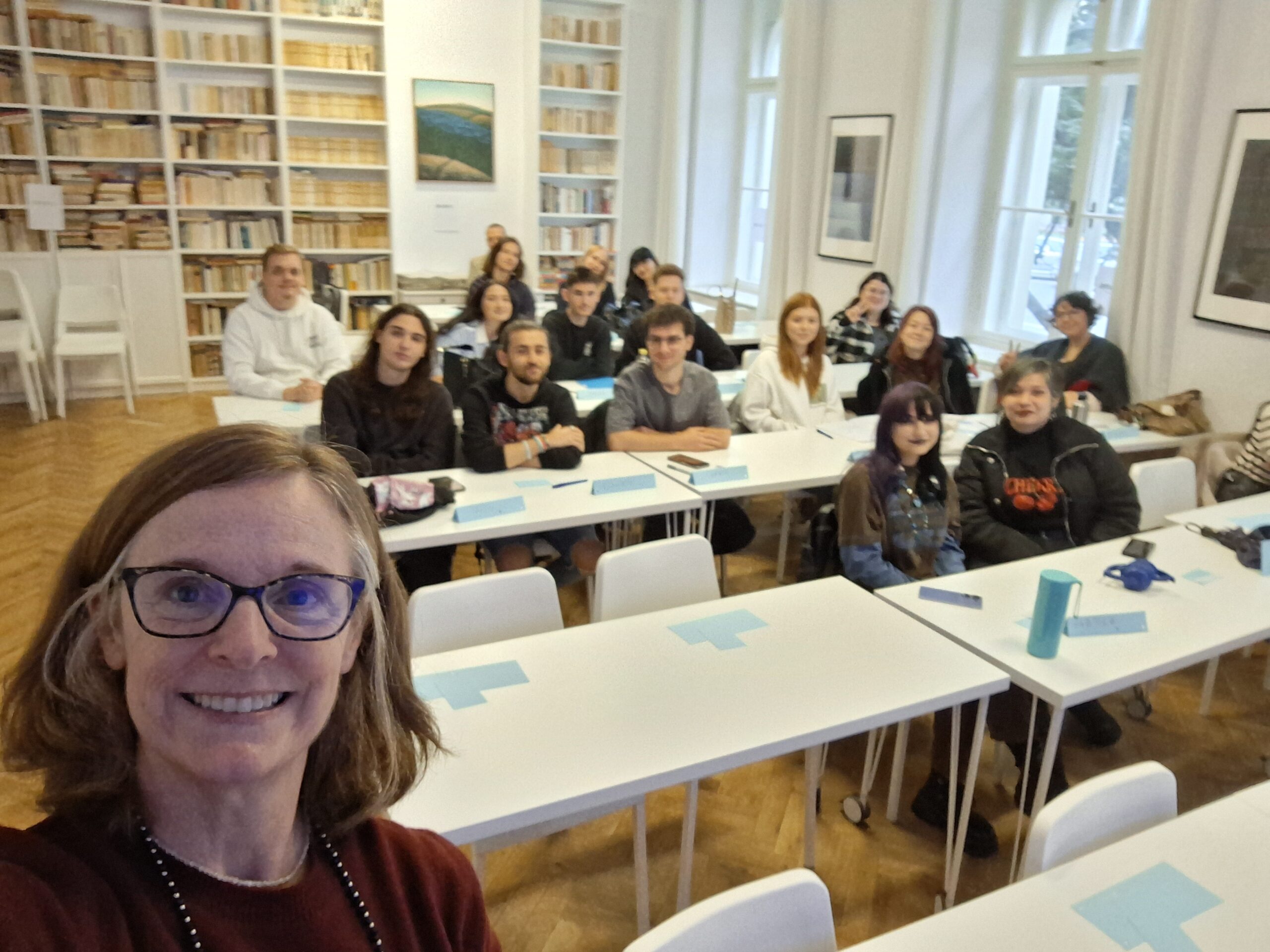
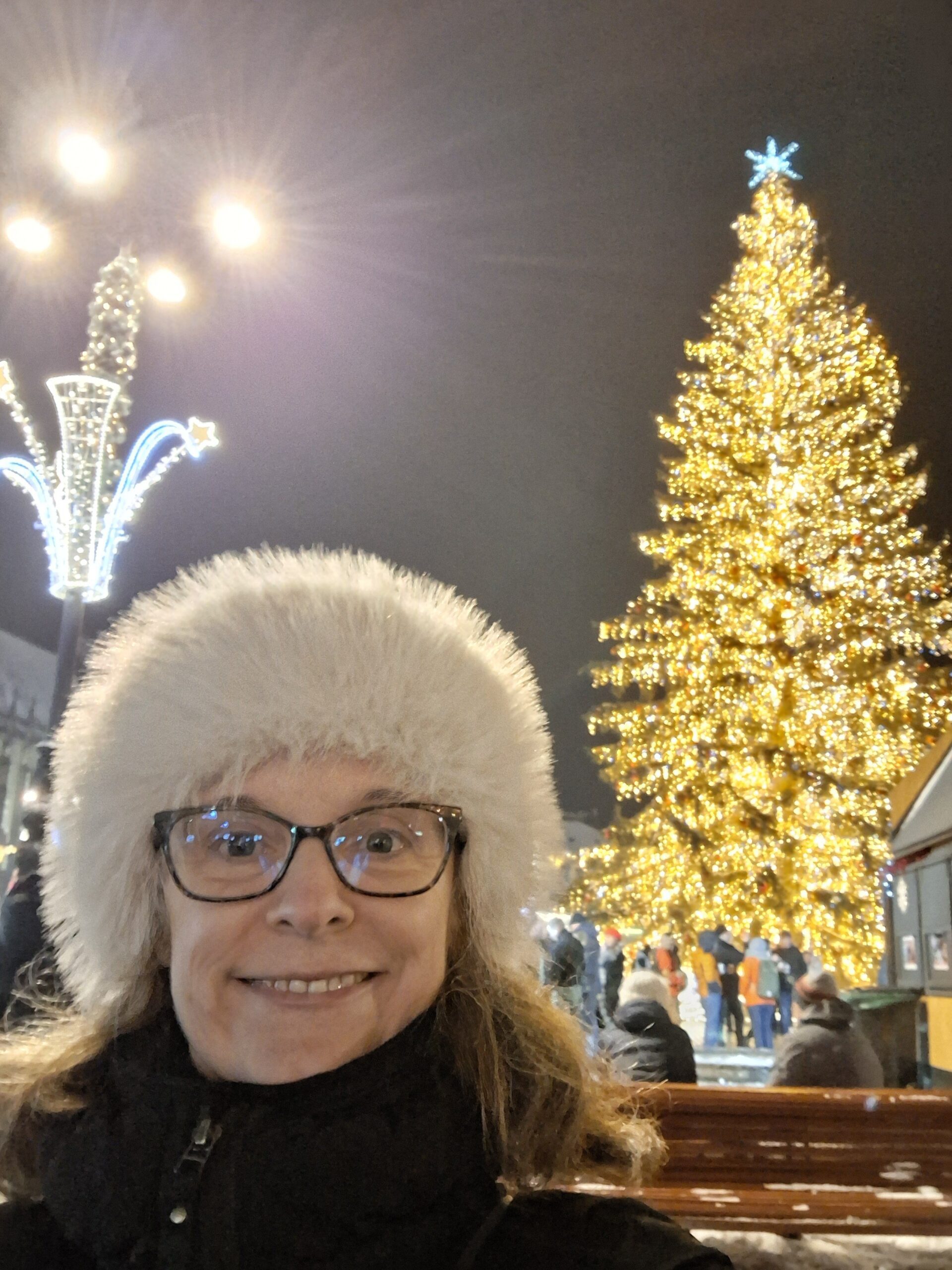
"I cannot thank the Fulbright Program enough, and especially Fulbright Romania, for the incredible experiences I had during my semester at Transilvania University of Brașov. I taught American Mass Media for the American Studies Program in the Faculty of Letters. My students were some of the best I have taught in my thirty years of teaching. Engaged, curious, generous, and kind, they provided me with fond memories of our time together in the classroom."


Jennifer L. Gauthier
U.S. Fulbright Scholar, 2025-2026
Charles A. Dana Professor of Media and Culture
Home University: Randolph College, Virginia
Host University: Transilvania University of Brașov
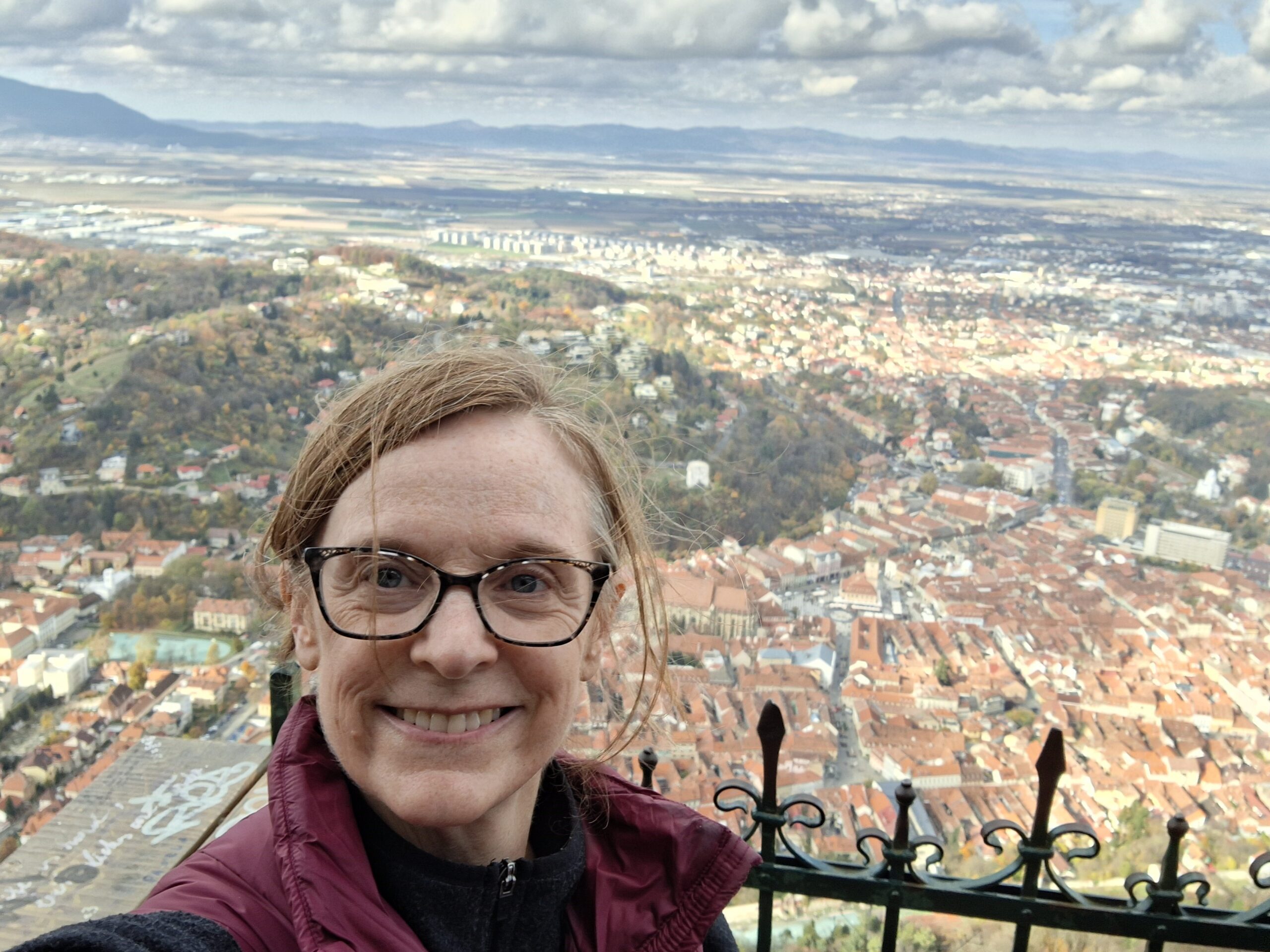
Brașov: Between the Mountains and Memories*
I cannot thank the Fulbright Program enough, and especially Fulbright Romania, for the incredible experiences I had during my semester at Transilvania University of Brașov. I taught American Mass Media for the American Studies Program in the Faculty of Letters. My students were some of the best I have taught in my thirty years of teaching. Engaged, curious, generous, and kind, they provided me with fond memories of our time together in the classroom.
Teaching American Mass Media in the Fall of 2025, I was eager to hear from Romanian young people what types of American media they use and their thoughts about it. Turns out, they are very familiar with many forms of American media and astute about its pros and cons. Their insights surprised me and encouraged me to re-think some of my assumptions. My teaching at Transilvania University helped me re-frame my courses for my home institution, Randolph College. I returned to my students with new strategies and new insights.
I learned much from my Romanian students about their country’s history and the impact that it had on their families. In an early assignment focused on news, I asked students to interview someone of a different generation about where they get their news. Many took the opportunity to speak with parents and grandparents, who talked about their experiences with media during the Communist era. I was fascinated to read accounts of their lack of trust in the media and their dearth of choices for getting information. These family experiences have shaped the way this generation of young people approach media messages.
During the fall semester, I was also delighted to meet other faculty and students at the lectures I gave. They were particularly interested in the Native American short films I showed in November, for Native American Heritage Month. We also had a spirited discussion around the removal of Communist monuments during my lecture on American monuments and memorials. I shared with them the difficult events surrounding the removal of Civil War monuments in my home region of Virginia.
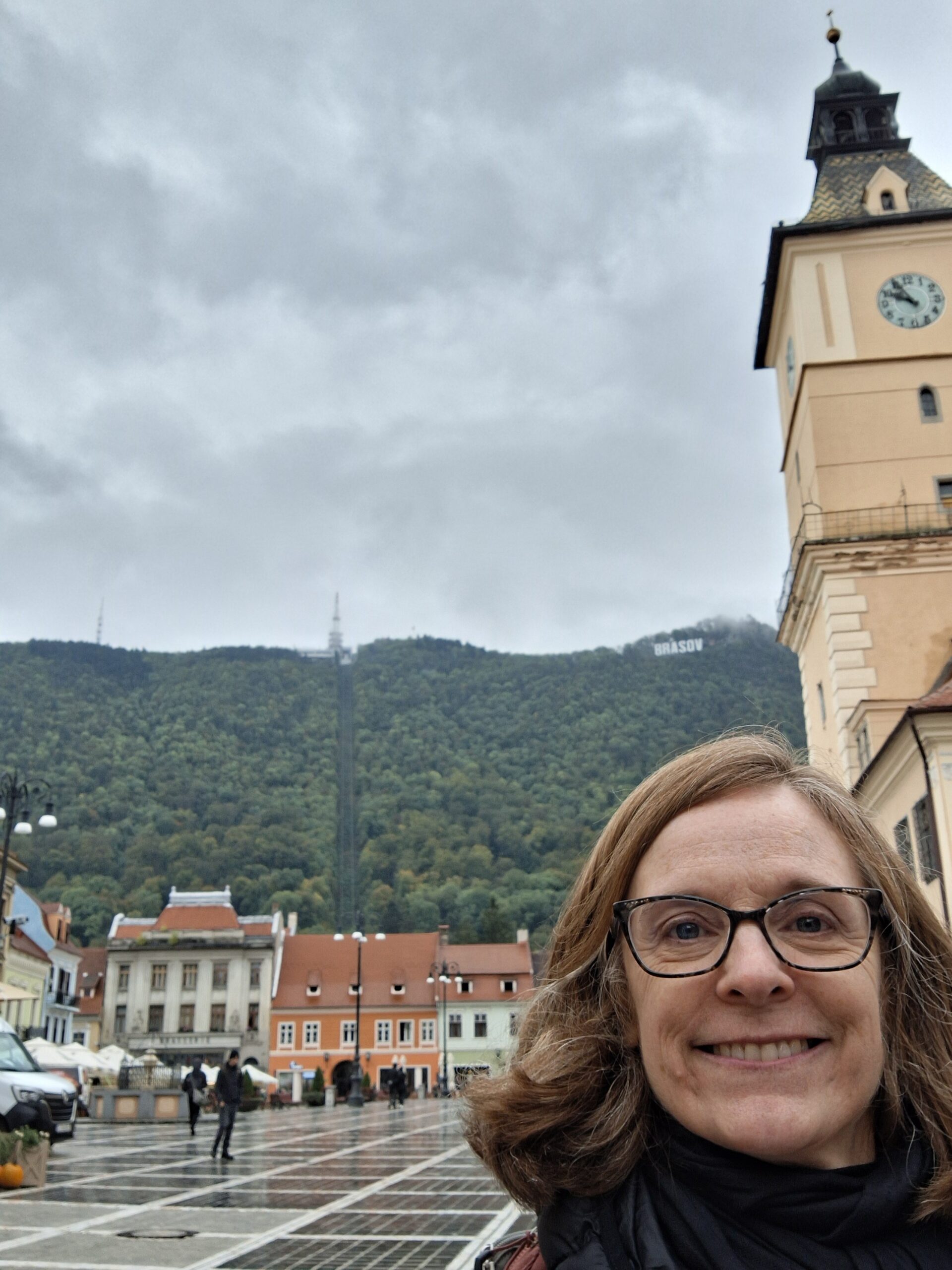
The history and culture of Romania got under my skin. I attended several performances of the Brașov Philharmonic, including a tribute to composer George Enescu; a Folk Dance Festival; and numerous museums. The Ethnographic Museum in Brașov was a favorite, for its extensive collection of Romanian textiles and clothing from all different regions of the country. During one visit, a museum guide ran one of the large looms that weaves eleven jacquard ribbons at a time. Brașov (Kronstadt) was a hub for the textile industry in the nineteenth and early-twentieth century. I even found the location of the William Scherg & Co. factory, identifying the existing buildings from a black and white photo in the museum. I realized that I had passed it numerous times when attending the Philharmonic, as it is directly across the street. It was thrilling to peek into the history of Kronstadt-Brassó-Brașov and hunt for visible remnants of its past.
I became fascinated also by the religious history of the Romanian settlers in Brașov. I visited churches all over the city and sought out the wayside crosses (troiță/troițe) in the Schei District. These ancient artifacts preserve the history of the earliest Hungarian and Romanian residents, who worshipped outdoors. The oldest cross, the Cross of Cutun, is protected by a glass cabinet in the cemetery of the Holy Trinity Church just off Piata Sfatului. Dating from 1292, this wooden cross features carvings of Biblical scenes. The crosses are cared for by the Brașov Junilor, who each have their own regalia and traditions, like fraternal organizations. They have ceremonies throughout the year that preserve the heritage of the region. I was fortunate enough to attend their celebration of Great Union/National Day on December 1, where each of the Juni process into Unity Square and place wreathes on the statue of the Unknown Soldier. The day celebrates the 1918 union of Transylvania, Bessarabia, and Bukovina, with the old kingdom of Romania (Wallachia and Moldavia), and the ceremony began with a Christian Orthodox service in the square. Families, young people and old people gathered in a crowd; the sense of community was powerful and moving.
I took several trips to Bucharest and was eager to learn more about the revolution of 1989. I remember being in high school and hearing news about the death of the dictator and his wife. Visits to the Museum of Communism in the Old Town and Ceaușescu House (the “Spring Palace”) on Bulevardul Primăverii helped give me a more complete picture of the historical events of the time. An exhibit at the Council House in Brașov provided information about the role that the workers of the Steagul Roșu plant played in turning the tide against Ceaușescu with their protest on November 15, 1987. My American friends and I spent a lot of time pondering the way that societies change and people persevere despite challenges.
With friends visiting from the U.S., I was able to travel all around Transylvania, stopping in Prejmer, Harman, Bran, Sibiu, Sibiel, and Sigisoara. The tradition of fortified churches in the region was intriguing, as was the complex history of religious transitions. A highlight of our road trip was the tiny village of Sibiel, outside Sibiu, home to the Fr. Zosim Oancea Museum of Icons on Glass. The museum houses 600 intricately painted and richly-decorated icons, plus other artifacts from the area. This eighteenth-century tradition is kept alive by a local woman who runs an inn directly across the street from the museum, where she invites groups to stay and take icon painting classes.
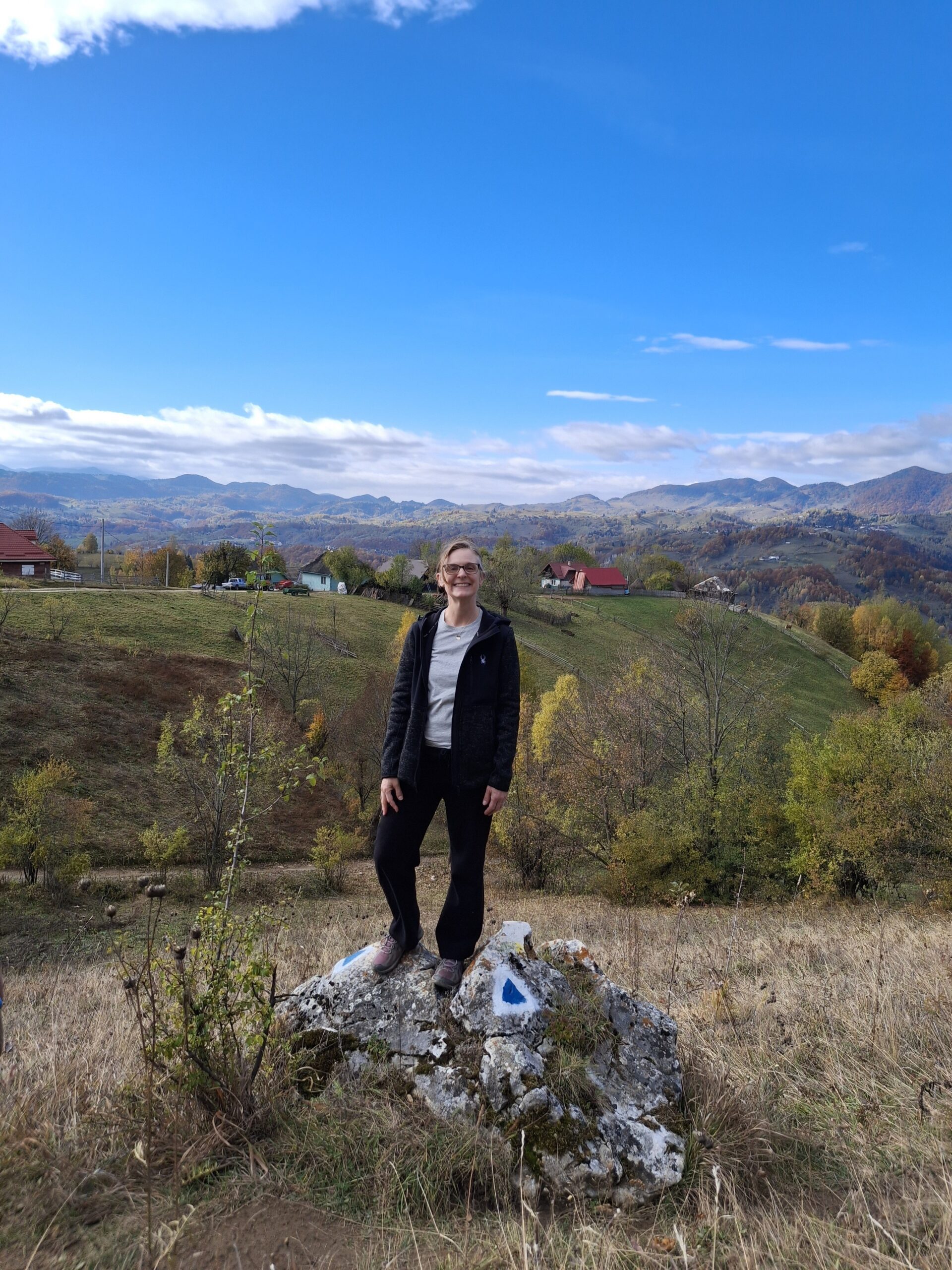
Another highlight of my time in Romania was a short stay in Măgura, a village in the Carpathian Mountains on the border of the Piatra Craiului National Park. I travelled with a group of academics who had come to Transylvania University for the conference, “Transatlantic Mountain Cultures: Engaging Rural Landscapes & Community (Re) Connection.” The conference focuses on comparing the mountain culture of the Carpathians with Appalachian culture in the U.S. As I live in Virginia at the foot of the Blue Ridge mountains, I found the presentations engrossing, particularly those that shared how professors and their students collaborate with their local communities to create positive change. Hearing these stories made me consider how I might engage my students in similar activities in my hometown, Lynchburg. Măgura is an idyllic mountain setting in the fall; we caught the peak of the leaf change. The in the mornings, the quiet was pierced only by the bark of guard dogs and the jangle of bells on livestock. We visited the home of the local schoolteacher, whose common room was dominated by a large table surrounded by benches and warmed by a large fireplace. The children gather here to make art and she encouraged us to try our hand at traditional egg painting. She also had a library set up for the children and hand-written fliers announced a “Book Fair.” I could tell that her warmth and generous spirit create a nurturing environment for her students.
My experiences in Romania will remain in my heart and in my mind: the strong spirit of the people, their pride and warmth, the beauty of the landscape, and the complex history of the nation-state. I will return.
*Inspired by a wooden plaque made by artisan, Aanicăi Elena at The Locals Gift Shop (Diaconu Coresi Str. no. 2, Brașov)
American Alumni Stories
Romania took hold of my heart in 2015 and since then has consumed my mind and soul. As with any genuine commitment, my relationship with this beautiful, complex country has grown and deepened over time as I have learned of its many tragedies, as well as its many triumphs. I have surrendered myself to Romania. [...] As I continue my Romanian journey, I marvel over the resiliency and fortitude of the people. I am fortunate to have developed close relationships, familial in many ways, with many Romanians. And I am eternally grateful to have been granted a Fulbright and honored to become part of this amazing community.