Romania took hold of my heart in 2015 and since then has consumed my mind and soul. As with any genuine commitment, my relationship with this beautiful, complex country has grown and deepened over time as I have learned of its many tragedies, as well as its many triumphs. I have surrendered myself to Romania. [...] As I continue my Romanian journey, I marvel over the resiliency and fortitude of the people. I am fortunate to have developed close relationships, familial in many ways, with many Romanians. And I am eternally grateful to have been granted a Fulbright and honored to become part of this amazing community.


Teacher-Training Workshop at American Corner Constanța
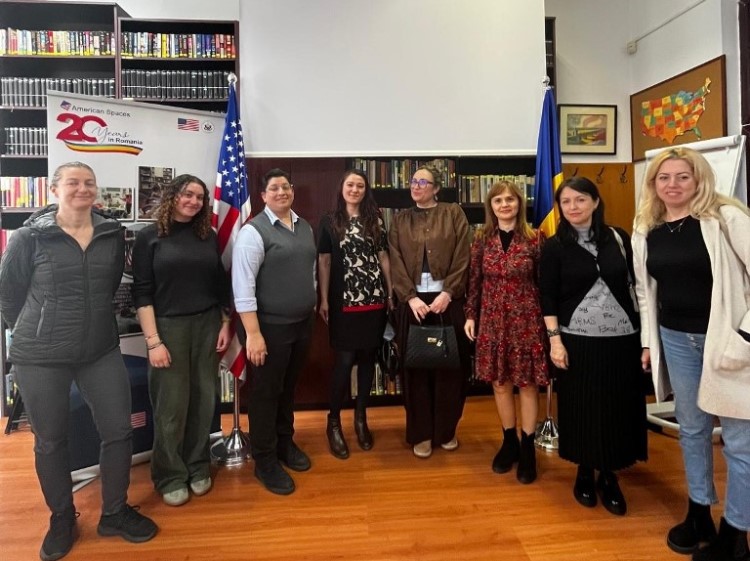
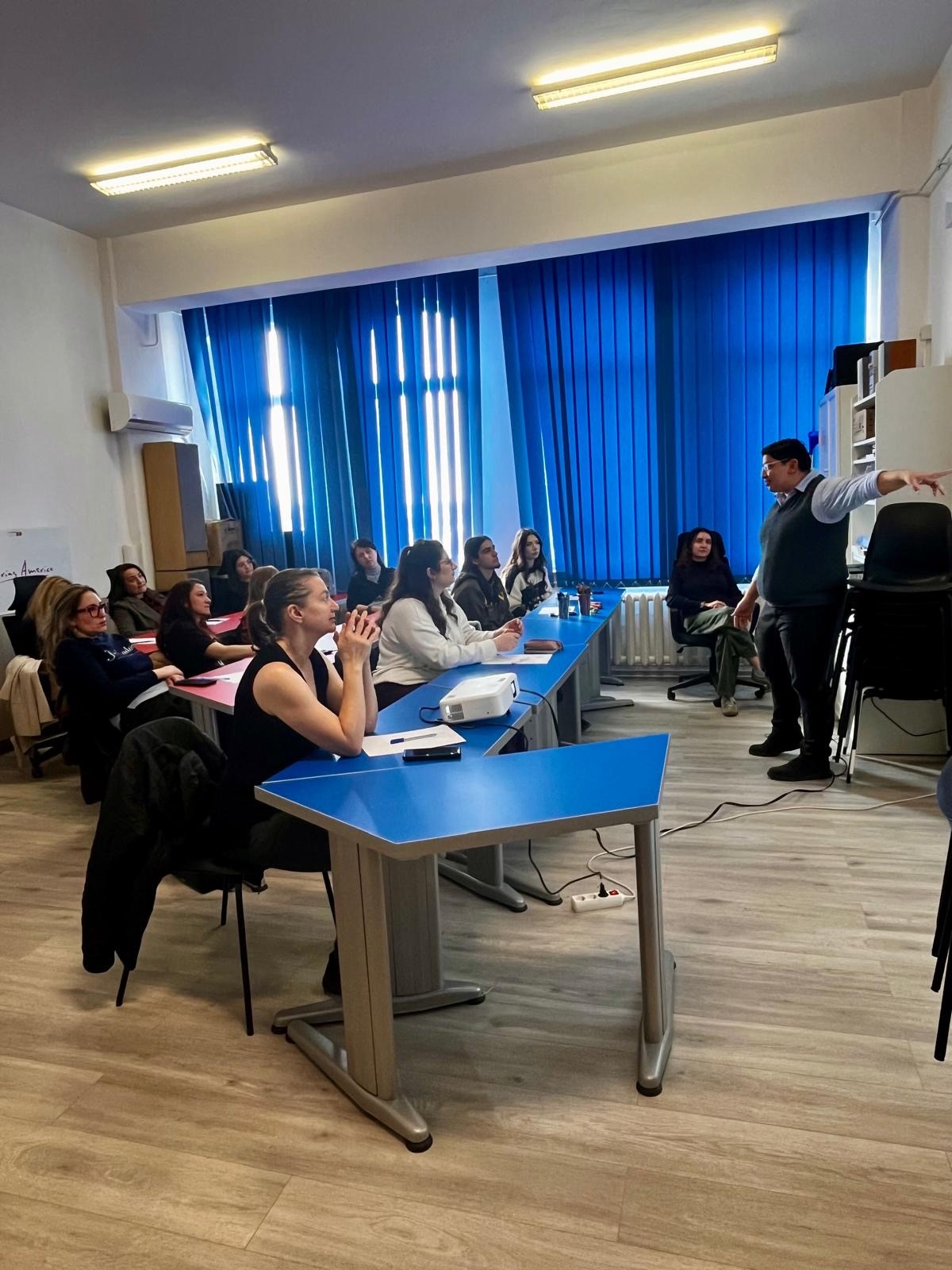
Fulbright ETA Isaura Bozu, with the support of fellow Fulbrighter Paris Marcurio, held a teacher-training workshop in Constanța at the American Corners. There were seven professors and four students from the Faculty of Letters at Ovidius University of Constanța in attendance.
This was a collaborative space where colleagues explored practical, student-centered strategies for strengthening language instruction across disciplines. Rather than focusing only on theory, the training emphasized hands-on learning. Participants engaged physically, linguistically, and reflectively with techniques they could implement into their classes. As teachers, they shared their “why” statements of motivation for pursuing this profession, highlighting a shared commitment to their students, encouraging creative expression, and improving communication skills.
The workshop began with holistic warm-up activities to prepare both body and mind for language learning. These included physical stretches such as wrist rolling, “victory poses,” and tapping techniques paired with “I am” statements that build confidence. Participants then reviewed the Multiple Intelligences theory by Howard Gardner. They also practiced kinesthetic learning with an interactive relay dictation game that encouraged movement and team collaboration. These activities covered the four main domains of language learning: reading, writing, listening, and speaking, helping to activate attention and memory in an increasingly challenging learning environment. Small shifts in classroom routines can create more supportive learning environments, especially for students who may feel hesitant about speaking English or participating individually.
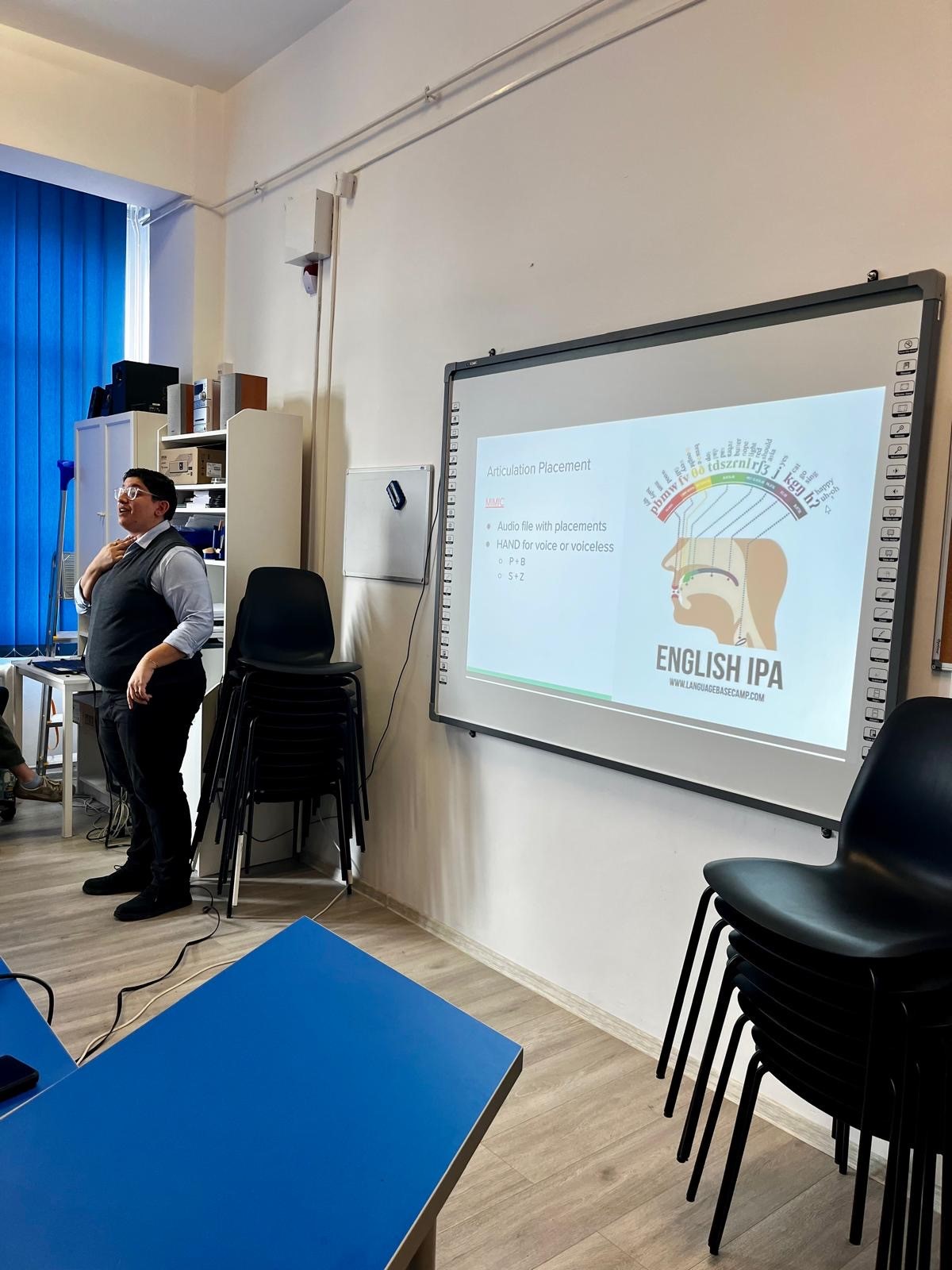
The session also explored English phonology, particularly the fourteen core vowel sounds and the distinction between voiced and voiceless consonants. Participants experimented with multisensory strategies, including elements inspired by American Sign Language phonics, to help learners better perceive and produce sounds. The workshop introduced the Perceptual Assimilation Model as a framework for understanding pronunciation challenges in second language learning, as well as the Green Pen Theory, which encourages highlighting strengths rather than errors. Together, these approaches supported a shift toward confidence-based feedback and clearer pronunciation awareness.
The workshop concluded by emphasizing the importance of dual objectives in both language and content when designing student-centered lesson plans. Participants were encouraged to incorporate music and animated short films to spark authentic communication and bridge cultures. The training proved to be a successful initiative, promoting pedagogical innovation and supporting both educators and students in building confidence and meaningful connections.